Sports injury treatment in Stamford, CT
A pickleball tweak, a sore knee that won't settle, a golf swing that leaves your back aching. You want to stop hurting and get back to playing. Care here is built around both, with a clear plan for returning to your sport.
- Pain during or after play
- Can't train fully
- Keeps coming back
Does this sound like you?
Sports injuries usually show up like this:
- Pain that starts during or after activity
- A sprain or strain that's slow to heal
- Overuse pain that keeps returning
- Loss of strength, speed or range of motion
- Stiffness after training
- Compensating or changing your form to avoid pain
What's actually going on
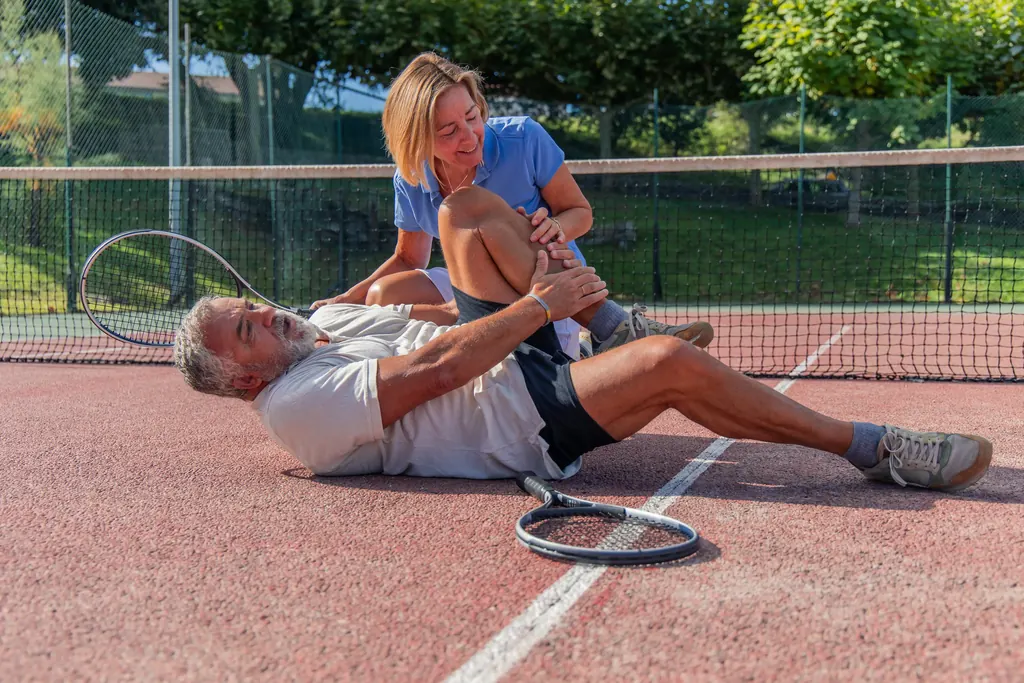
Sports injuries usually come from one of two things. One is a sudden event, like a twist, a fall or a collision. The other is overuse: more load than your body is ready for. Overuse problems like runner's knee, tennis elbow, shin splints and back pain from golf often trace back to stiffness or weakness elsewhere in the body.
Getting out of pain comes first. Finding out why it happened helps keep it from coming back.
When to see a medical doctor first
Call 911 or go to the ER now if you have:
- A head impact followed by confusion, headache or vomiting
See your doctor within a day or two if you have:
- A pop with immediate swelling or loss of function
- Being unable to bear weight or use the limb
- A visible deformity
Head injuries need emergency care. The others usually need a medical exam or imaging before treatment.
How Dr. Burstein treats sports injuries
First the injury settles, then you rebuild. A typical plan combines:
What recovery usually looks like
- First visits Diagnosing the injury, calming pain, and protecting the area.
- Weeks 1–4 Restoring range of motion and beginning strength work.
- Return to play A gradual, staged return to your sport. Timelines depend on the injury.
Timelines depend on the injury. You'll get a staged plan so you don't go back too soon.
What you can do today
- Don't “play through” sharp pain. Modify, don't push.
- Ice in the first 48 hours for acute injuries.
- Warm up properly and increase training load gradually.
- Sleep and hydration matter for recovery as much as treatment does.
Common questions
Do I have to stop playing while I'm treated?
Not always. Often you can keep training with modifications. You'll get clear guidance on what's safe and what to avoid while you heal.
Do you only treat serious athletes?
No. Most of the athletes here are weekend warriors: runners, golfers, tennis and pickleball players, and people getting back into the gym.
How fast can I get back to my sport?
It depends on the injury. Minor strains may take a week or two. More significant injuries take longer. You'll get a staged return-to-play plan so you don't go back too soon.
Early-morning and after-hours visits. No referral needed.
Book a visit or call (203) 325-8112Other problems Dr. Burstein treats
Knee pain
Aching, stiff or unstable knees from arthritis, overuse or a sports injury.
Shoulder pain
Pain, weakness or stiffness that makes reaching, lifting or sleeping on your side difficult.
Low back pain
Aching, stiffness or sharp pain in the lower back, from a sudden strain or slowly building over time.
Let's find out what's behind your injury
Tell us a little about what's going on. The office will call you back to find a time, and can look up your insurance benefits before you come in.
- A call back from the office to set a time
- Help looking up your insurance benefits
- A complimentary first evaluation for new patients