Cold laser therapy in Stamford, CT
Injured tissue heals at its own pace, and inflammation can make that pace feel endless. Cold laser therapy uses specific wavelengths of light that may help ease pain and inflammation in muscles, tendons and joints. It's painless, takes minutes, and there's no downtime.
- One-on-one care
- No referral needed
- Early & after-hours visits
When cold laser therapy makes sense
It's usually added to a plan when:
- You have a sprain, strain or tendon problem that's slow to heal
- Swelling and inflammation keep flaring up
- Arthritis makes your knees, hands or shoulders ache
- You want to recover faster from a sports injury
- You need a gentle option because adjustments aren't right for an area
- You'd like to rely less on anti-inflammatory medication
Laser therapy is rarely used on its own. Dr. Burstein will tell you whether it adds anything for your injury.
How it works
What “cold laser” means
Cold laser therapy, also called low-level laser therapy or photobiomodulation, uses light at specific wavelengths. It's called “cold” because, unlike surgical lasers, it doesn't heat or cut tissue. The light is absorbed by cells in the treated area, and research suggests it can help reduce pain and inflammation and support tissue repair.
What a session feels like
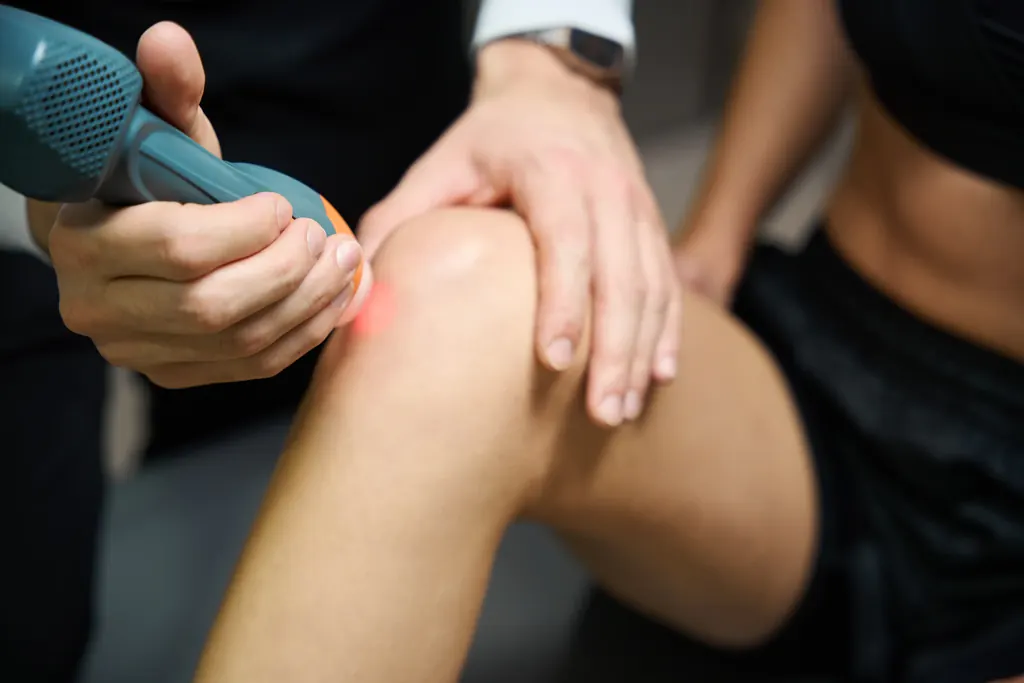
Nothing dramatic. You might feel slight warmth or nothing at all. The laser is held over the area for a few minutes, depending on the size and depth of the injury. You can drive, work and exercise right after.
Where it fits in your plan
Laser therapy is rarely the whole plan. It's most useful alongside adjustments and corrective exercise, especially in the early, inflamed stage of an injury or for joints that are too sore to work on directly.
What a visit looks like
- Assess Dr. Burstein examines the injured area and confirms laser therapy is a good fit.
- Protect You and the doctor wear protective eyewear while the laser is in use.
- Treat The laser is applied over the area for a few minutes. Most people feel nothing, or gentle warmth.
- Repeat A short series of sessions is typical, often combined with your other treatment.
Conditions it helps
Cold laser therapy is often part of the plan for:
Knee pain
Aching, stiff or unstable knees from arthritis, overuse or a sports injury.
Shoulder pain
Pain, weakness or stiffness that makes reaching, lifting or sleeping on your side difficult.
Sports injuries
Sprains, strains and overuse injuries from running, golf, tennis, pickleball, CrossFit and more.
Neuropathy
Numbness, tingling, burning or weakness, usually in the feet and hands.
Low back pain
Aching, stiffness or sharp pain in the lower back, from a sudden strain or slowly building over time.
Neck pain
Stiffness, soreness or sharp pain in the neck, often from desk work, sleep position or stress.
Questions about cold laser therapy
Is cold laser therapy safe?
It's considered very low risk. It doesn't burn or cut tissue. Eye protection is used during treatment, and it isn't used over certain areas, such as the abdomen during pregnancy or over known cancers.
Does laser therapy hurt?
No. Most patients feel nothing, or slight warmth.
How many laser sessions will I need?
A short series is typical, often 6 to 12 sessions depending on the injury. Many people notice less pain within the first few.
Can laser therapy be combined with chiropractic care?
Yes, and that's how it's usually used here: in the same visit as your adjustment, so you don't need extra appointments.
Complimentary first evaluation for new patients. No referral needed.
Book a visit or call (203) 325-8112Often combined in the same visit
Chiropractic care
Precise, gentle adjustments that restore movement to stiff, painful joints, so muscles and nerves can settle down.
Corrective exercise & rehab
Short, targeted exercises that build strength and control, so pain is less likely to return.
Nutrition & lifestyle
Practical changes to diet, sleep, desk setup and daily habits that support your recovery.
Find out if cold laser therapy can help you
Tell us a little about what's going on. The office will call you back to find a time, and can look up your insurance benefits before you come in.
- A call back from the office to set a time
- Help looking up your insurance benefits
- A complimentary first evaluation for new patients